
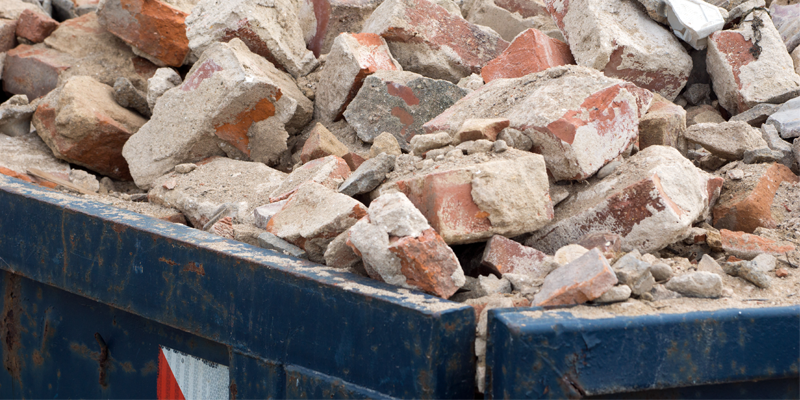
Grab Hire vs Skip Hire – Which Is Better for Your Project?
If you need to remove soil, rubble, hardcore, or other waste from a building, landscaping, or clearance project, two common options are grab hire and skip hire.
Both have their place, but they work very differently.
For projects where you already have a large amount of loose material ready to collect, grab hire is often the quicker, more practical option. A grab lorry arrives on site, loads the material with its hydraulic arm, and takes it away in the same visit.
A skip can make more sense when waste is going to build up gradually and you want somewhere to store it while work is taking place.
So, which should you choose? The answer depends on the amount and type of waste, how quickly you need it removed, site access, and whether you want to load the waste yourself.
Grab hire vs skip hire at a glance
| Grab Hire | Skip Hire | |
|---|---|---|
| How waste is loaded | Grab lorry loads it for you | You fill the skip |
| Best for | Larger quantities of loose waste | Waste produced gradually |
| Typical materials | Soil, hardcore, rubble, clay, green waste and construction waste | General building and renovation waste, depending on skip provider |
| Time on site | Usually collected during one visit | Skip may remain for several days |
| Loading labour | Hydraulic grab arm loads the waste | Usually requires manual or mechanical loading |
| Access | Lorry must be able to safely position close enough to the material | Space is needed to deliver and leave the skip |
| Over walls or fences | Often possible with the grab arm | Waste normally has to be carried to the skip |
| Highway permit | No skip is left on the road | A permit is normally required if a skip is placed on a public road |
| Large quantities of soil/rubble | Particularly well suited | May require larger or multiple skips |
The key point is that choosing between the two shouldn’t come down to the initial hire price alone. Consider the whole waste removal process, including loading, capacity, site access, permits, and how long you need the waste container or vehicle on site.
What is Grab Hire?
Grab hire uses a specialist lorry fitted with a hydraulic grab arm to collect loose waste and materials directly from your site.
Instead of loading the waste into a container yourself, the lorry pulls alongside the collection area and the operator uses the grab to lift the material into the vehicle.
This makes grab hire particularly useful for muck away, soil, clay, hardcore, concrete, rubble, green waste and other materials generated during construction, groundworks and landscaping projects.
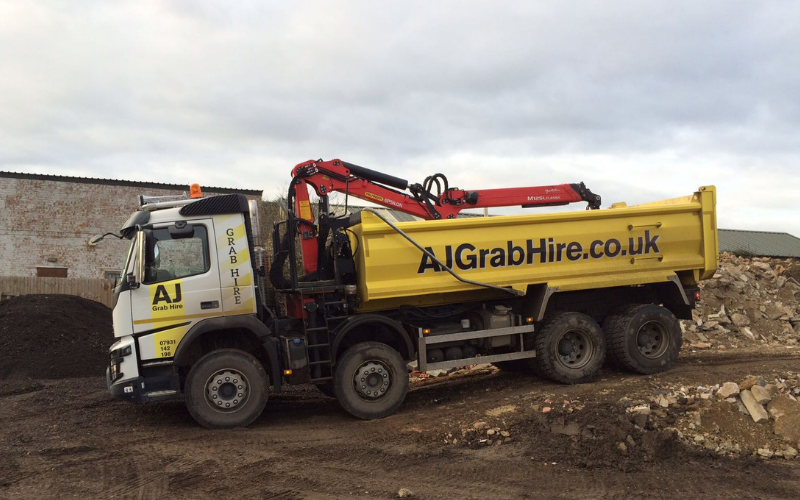
At AJ Grab Hire, our larger 8-wheel grab lorries can carry up to 16 tonnes of material, while smaller vehicles are available where site requirements call for them. Our 8-wheel vehicles also have a grab reach of up to approximately 7.6 metres, so we can often collect waste from behind walls, fences, and other obstacles where suitable access is available. See our grab lorry sizes in our local fleet.
This combination of capacity and reach is one of the main reasons grab lorries are widely used for larger site clearance and waste removal projects.
What is skip hire?
With skip hire, a company delivers an empty container to your property or site and leaves it for you to fill.
Once it is full, the skip company returns and takes it away.
The biggest advantage is flexibility. If you’re working on a renovation over several days or weeks and producing relatively small amounts of waste at different stages, a skip available for the duration gives you somewhere to put it as the project progresses.
For example, if you’re stripping out rooms during a house renovation and producing timber, packaging, fixtures and general building waste throughout the week, a skip can be convenient.
The trade-off is that you are responsible for getting the waste into it.
If you’re dealing with tonnes of excavated soil or a large pile of hardcore, that can become a significant consideration.
When is grab hire better than a skip?
Grab hire really shines when you already have a substantial amount of material ready to be removed.
Imagine you’ve excavated a garden for a new patio, driveway or extension and now have a large pile of soil at the front of the property.
With a skip, somebody has to move that soil into the container. Depending on where the skip is positioned, that could mean using wheelbarrows, machinery or additional labour.
With a grab lorry, the vehicle can position alongside the material and lift it directly into the truck.
For that type of project, grab hire can eliminate an entire handling stage.
It’s particularly worth considering when you have:
- large quantities of soil, muck or clay
- concrete, bricks or hardcore to remove
- landscaping or groundworks waste
- a site that needs to be cleared quickly
- material sitting behind a wall or fence
- limited space to keep a skip on site
- enough waste that several smaller collections could otherwise be required
Builders, landscapers, groundworkers, and construction companies commonly use grab hire, but it can be equally useful for homeowners undertaking larger garden renovations, extensions, and property projects.
When might a skip be the better option?
Grab hire isn’t automatically the right answer for every job.
If you’re producing waste slowly rather than clearing an existing pile, a skip may be more convenient.
Consider a property renovation taking place over two weeks. Old kitchen units might come out on Monday, flooring later in the week and general building waste after that.
In this situation, having a container available throughout the project can make sense because you’re not yet ready for everything to be collected in one visit.
A skip can therefore be particularly useful when:
- waste will accumulate gradually
- you want a container available throughout the project
- the quantity of waste is relatively modest
- you have suitable private space for the skip
- the material cannot easily be placed somewhere accessible to a grab lorry
The question isn’t really “Are grab lorries better than skips?”
It’s “Which method better suits the way my particular project is producing waste?”
That distinction usually makes the choice much easier.
Is grab hire cheaper than skip hire?
There isn’t one answer that applies to every project.
The cost depends on factors including the amount and type of material, your location, vehicle requirements and the number of collections needed.
However, when comparing grab hire with skip hire, don’t only compare the headline hire price.
Consider the total cost of removing the waste.
If you hire a skip, you may also need to account for the time or labour required to load it. If one skip isn’t enough, you may need additional collections or replacements.
With grab hire, the lorry loads the material itself. For a large pile of loose soil, hardcore or rubble, this can make the overall operation significantly quicker.
AJ Grab Hire’s 8-wheel vehicles, for example, have a carrying capacity of up to 16 tonnes, allowing them to remove substantial quantities of material in one collection.
The most useful comparison is therefore not simply “How much does a skip cost compared with a grab lorry?”, but:
“What is the most efficient way of removing all the waste from my project?”
Do I have to load a grab lorry myself?
No. That’s one of the main benefits of hiring a grab lorry.
The vehicle’s hydraulic arm picks up the material and places it directly into the lorry body.
Ideally, stockpile waste somewhere the vehicle can safely reach. The closer and more accessible the material, the easier collection will normally be.
AJ’s grab lorries can reach several metres from the vehicle’s side, allowing them to collect waste over many walls and fences where access conditions permit.
If you’re unsure whether a grab lorry can reach your waste, discuss access before booking. Parked vehicles, overhead cables, trees, narrow entrances, and the waste pile’s position can all affect how the lorry operates.
Does a grab lorry need a permit?
One potential advantage of grab hire is that you don’t leave a skip on the property.
In England and Wales, you need a skip licence or permit when you place a skip on a public road. You don’t need a permit when the skip is located entirely on private land. Local councils may also require lighting, markings, and safe positioning.
A grab collection doesn’t involve leaving a skip on the highway, so you don’t need a skip permit.
The grab lorry will still need a safe, legal place to stop and operate, and normal road, access, and safety restrictions still apply.
For properties with no suitable place to leave a skip for several days, a grab collection can be a much simpler solution.
Which can take more waste – a grab lorry or a skip?
Skips and grab lorries come in different sizes, so no single capacity comparison applies to every vehicle and every skip.
What matters more is how much material you can remove in one collection.
AJ Grab Hire’s 8-wheel grab lorries can carry up to 16 tonnes, or about 13 cubic metres, depending on the material being collected and legal vehicle weight limits.
That makes them particularly suitable for projects producing substantial quantities of heavy material such as soil, hardcore and muck.
If you only have a small amount of lighter general waste, you may not need that capacity. But for excavation, landscaping, and groundwork projects, removing a large quantity in one visit can make a substantial difference.
What waste can a grab lorry collect?
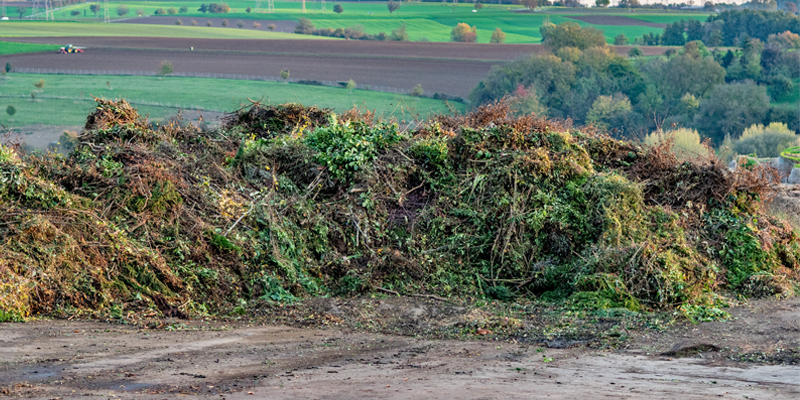
Grab lorries handle loose bulk materials particularly well.
Depending on the waste and collection arrangements, this can include materials such as:
|
Soil and earth |
Clay |
Hardcore |
|
Concrete and bricks |
Muck |
Green waste |
|
Timber |
Construction waste |
General rubbish |
AJ Grab Hire provides specialist services for muck away, hardcore removal, green waste, timber, contaminated soils and rubbish clearance, alongside its core grab hire operation.
However, not every material can be placed in the same load. If you have potentially hazardous, contaminated, or unusual waste, tell the waste carrier what you have before arranging collection so they can confirm the correct disposal method.
Grab hire can also help when access is difficult
One misconception is that because a grab lorry is a large vehicle, the waste needs to be sitting immediately next to the road.
That’s not always the case.
The hydraulic arm provides considerable reach from the side of the vehicle. This lets you collect material from behind a garden wall, fence, hedge, or other obstacle without manually moving every tonne of material to the roadside.
For AJ Grab Hire’s larger vehicles, the grab can reach up to approximately 7.6 metres from the truck.
You still need enough room for the vehicle to park and for the hydraulic equipment to operate safely, so discuss difficult access beforehand.
This is particularly important around residential streets and restricted sites in areas such as Cambridge, Royston, Stevenage and Newmarket.
What if I need aggregates delivered as well?
Waste removal is often only one stage of a project.
For example, you might excavate soil and old hardcore while preparing a new driveway, then need fresh aggregate brought onto the site for the next stage.
AJ Grab Hire provides both waste removal and aggregate supply, including materials for construction, groundwork and landscaping projects. Grab and tipper services can therefore be coordinated around different stages of the job.
Planning waste removal and material deliveries together can help reduce delays and keep the site moving rather than treating every part of the project separately.
So, should I hire a grab lorry or a skip?
For large quantities of loose waste already waiting to be removed, hiring a grab lorry is often the better choice.
It is particularly well suited to soil, muck, hardcore, rubble, and landscaping waste because the lorry loads the material and removes it in the same visit.
If your waste will build up slowly and you need somewhere to store it during a longer renovation, a skip may make more sense.
The easiest way to decide is to consider four things:
What waste do you have? How much is there? Where is it located? And is it ready to be removed now?
If you have a significant pile of waste already on site, speak to AJ Grab Hire about the quantity, material and access available. We can advise on the most appropriate grab lorry for the job and arrange collection across Royston, Cambridge, Stevenage, Newmarket and surrounding areas.
AJ Grab Hire is a registered Environment Agency waste carrier and provides grab hire, site clearance, muck away, aggregate supply and related waste removal services for domestic and commercial projects.
Frequently Asked Questions about Grab Hire and Skip Hire
Is grab hire better than skip hire for soil?
For a large quantity of excavated soil that is already piled somewhere accessible, grab hire is usually the more practical option. The grab arm loads the soil directly into the lorry, avoiding the need to manually move tonnes of material into a skip.
Is a grab lorry suitable for a domestic project?
Yes. Grab hire isn’t just for construction sites. It can suit extensions, driveway projects, garden landscaping, property renovations, and other domestic work where you need to remove substantial quantities of waste.
How much can an AJ Grab Hire lorry carry?
AJ’s larger 8-wheel grab lorries can carry up to 16 tonnes of material, with smaller vehicles also available for projects where different access or capacity is required.
Can a grab lorry reach over a garden wall?
Often, yes. A grab arm can reach over walls and fences where the lorry can be safely positioned. AJ’s larger grab lorries have a maximum reach of approximately 7.6 metres, although actual collection suitability depends on access, obstacles and the position of the waste
Do I need a permit for grab hire?
You don’t need a skip permit just because you’re using Grab Hire, since you won’t be leaving a skip on the highway. The vehicle still needs safe and legal access to carry out the collection. By comparison, a skip placed on a public road normally requires a local authority skip permit.
Can grab hire remove hardcore and rubble?
Yes. Grab lorries are commonly used to remove hardcore, bricks, concrete and rubble from construction, renovation, landscaping and groundworks projects. AJ Grab Hire also provides a dedicated hardcore removal service.
Can AJ Grab Hire deliver aggregates after collecting waste?
Yes. AJ provides aggregate supply alongside grab and tipper hire services, so waste removal and incoming materials can be coordinated as part of the same wider project.